You have patellar syndrome, also known as patellofemoral syndrome? You’re not a unique case since it’s the most common diagnosis established when pain manifest in front of the knee. This syndrome happens when the kneecap follows a wrong path during a knee movement.
As a consequence, pain occur and may be insidious with variable frequency and intensity. Any activity that involves repeated or prolonged flexions of the knee (running, sitting position…) contributes to increasing these symptoms.
Patellar syndrome or patellofemoral syndrome is not only the inflammation of the kneecap cartilage while slipping against the femur but also the inflammation of its stabilising elements: quadriceps tendon, patellar ligaments and patellar tendon.
This is a common condition that mainly affects adolescents and young adults, more specifically girls, sportspersons and the elderly.
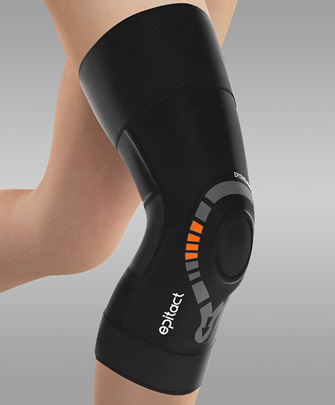
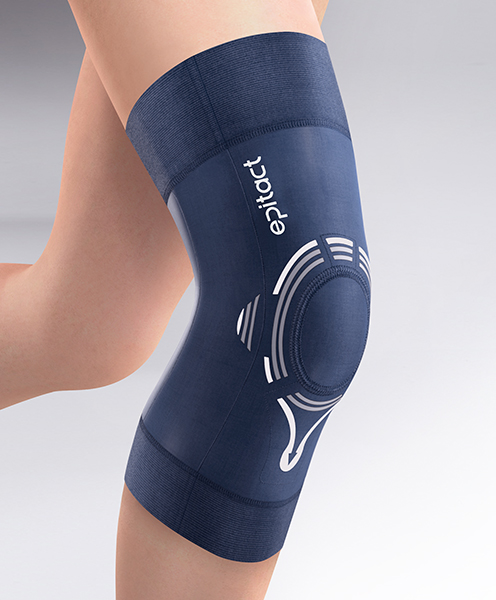
EPITACT® has developed thin knee braces intended to stabilise the kneecap, including during sport activities.
The PHYSIOstrap™ SPORT* has been created to stabilise the knee during sport and to allow continuing or resuming physical activities.
Also, the PHYSIOstrap™ Medical* is designed to activities entailing repeated flexions and extensions of the joint.
*These products are class I medical devices that bear the CE marking under this regulation. Carefully read the instructions before use. Manufacturer: Millet Innovation. 06/2021
Patellar syndrome only affects the knee joint.
FALSE! Patellar syndrome may be linked with a muscle disorder in the thigh, which means an imbalance between the anterior and posterior muscles. That’s why it is crucial while recovering a physical activity to favour a muscular strengthening of the thigh. It is also important to protect the knee with a proprioceptive brace like the PHYSIOstrap™ SPORT*.
Swimming is particularly adapted to patellar syndrome.
TRUE and FALSE! As a reminder, the pain related to patellar syndrome often manifests during physical activities involving repeated flexion of the knee. Indeed, this movement leads to high pressures on the kneecap. While swimming breaststroke for example, the kneecap tends to be more prominent: the conditions are then unfavourable. On the contrary, the front-crawl swimming does not affect the kneecap.
Self-rehabilitation can be positive in the case of patellar syndrome.
TRUE ! Between sessions with a physiotherapist, self-rehabilitation can help you recover your abilities more quickly and resume activities normally. Several exercises can be daily performed without any equipment.
 Contact
 Pharmacie