 Contact
 Pharmacie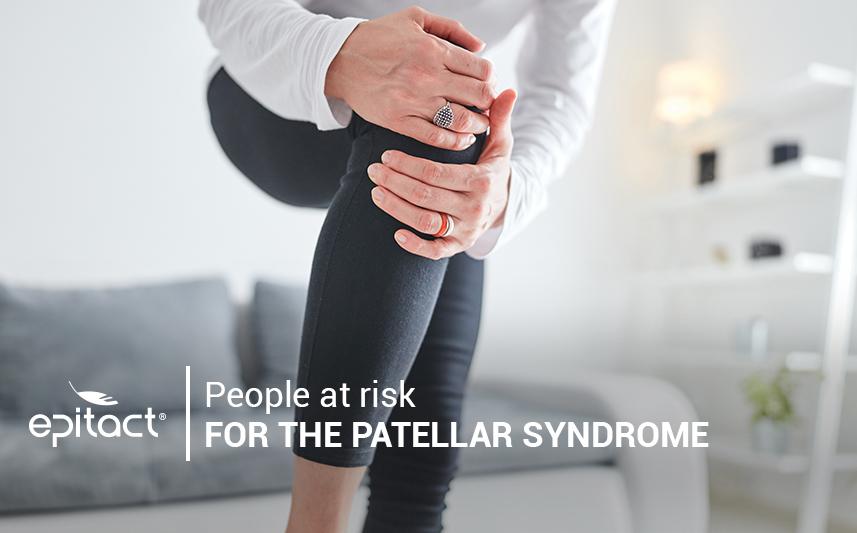
How to explain the high incidence of patellar syndrome? Which persons are concerned by this knee condition? People at risk are numerous due to the high incidence of this condition in the world population. Even if it affects specific subcategories of population, it is a recurrent condition in the field of sport. Patellar syndrome represents 25% to 40% of all knee problems seen in a sports medicine clinic(1)!
The patellar syndrome, also called patellofemoral pain syndrome, can be defined as the inflammation of the kneecap cartilage. This inflammation is especially caused by a poor sliding of the kneecap against the femur. The resulting frictions contribute to the cartilage deterioration, and consequently to pain in the joint.
Who has never felt pain in the knee? Who are the people at risk? What are the factors that determine the epidemiology of patellar syndrome? EPITACT® helps you understand who is concerned and how to fight against this condition.
Epidemiology of patellar syndrome: who are the people at risk?
Women
Among the people at risk, women would be nearly two times more affected than men by the patellar syndrome(1). Sedentary people can also be concerned but active population is more so affected.
Sportspersons
Sportspersons are also people at risk for patellar syndrome. Indeed, this diagnosis is the most frequently established among people doing regular physical activity. For example, this condition would concern approximately 25% of all injuries in runners(2). In sportspeople, some sports are more at risk than others. For example, jumping sports, pivoting sports or basketball. It has also been proved that practising one single sport rather than several sports is more harmful for the knee. Indeed, sportspeople specialised in one sport would be more likely to develop patellar syndrome than people who practice several sports(3).
Adolescents
Lastly, adolescents also represent a large proportion of people at risk of this syndrome. This condition particularly manifests at the end of growth. The prevalence of patellar syndrome in adolescents is 28.9% against 22.7% in the general population(4).
Factors of patellar syndrome epidemiology
The incidence of patellar syndrome can be explained by a large range of predisposing factors. Some are external, some are directly associated with the condition. Let's remind that activities that involve repeated or prolonged flexion/extension movements favour the patellofemoral pain. It mainly concerns running, hiking, football or prolonged sitting positions for example.
Intrinsic factors in people at risk
Some factors are crucial to understand the significance of the epidemiology of patellar syndrome. Indeed, people at risk can have anatomical disorders or problems linked with joint biomechanics. For example, let’s name foot pronation, genu valgus (inwards) or varum (outwards). There are also people with unequal length of legs or patella anomaly (patella alta). In muscles, lacks of flexibility or imbalances (hamstrings, quadriceps, abductors) can play a role.
The epidemiology of patellar syndrome can also be explained by congenital anomalies (patellofemoral dysplasia) or medical history of knee surgery or trauma. Lastly, intrinsic factors that favour patellar syndrome include hypermobility, poor kinematics of the kneecap (inappropriate movements) or hip external rotation.
Extrinsic factors in people at risk
Also, the epidemiology of patellar syndrome can be explained by the diversity of external factors to the condition. Unlike intrinsic factors, these are relatively manageable. They include overweight, the kind of sport or activities practised or the equipment such as the type of shoes for example. Some positions (squatting, sitting) or environmental conditions are also incriminated (type of surface, stairs, etc.).
Relieving patellar syndrome
If you’re a person at risk, do not panic, solutions exist! To relieve your pain and allow you to carry on your activities, EPITACT® has designed knee braces. For a preventive use or to resume activities, these medical devices stabilise your kneecap without impeding movements.
To learn more about the way of preventing and healing the patellar syndrome, click HERE. Also understand the link between this condition and sportspersons, especially runners.
*These products are class I medical devices that bear the CE marking under this regulation. Carefully read the instructions before use. Manufacturer: Millet Innovation. 09/2021
For more details about this general and simplified approach, here are further sources:
(1)Bump, Jared M., et Lindsay Lewis. « Patellofemoral Syndrome ». In StatPearls. Treasure Island (FL): StatPearls Publishing, 2021. http://www.ncbi.nlm.nih.gov/books/NBK557657/. Vora, Molly, Emily Curry,
(2)Amanda Chipman, Elizabeth Matzkin, et Xinning Li. « Patellofemoral pain syndrome in female athletes: A review of diagnoses, etiology and treatment options ». Orthopedic Reviews 9, no 4 (20 février 2018): 7281. https://doi.org/10.4081/or.2017.7281.
(3)Hall, Randon, Kim Barber Foss, Timothy E. Hewett, et Gregory D. Myer. « Sport Specialization’s Association with an Increased Risk of Developing Anterior Knee Pain in Adolescent Female Athletes ». Journal of Sport Rehabilitation 24, no 1 (février 2015): 31‑35. https://doi.org/10.1123/jsr.2013-0101.
(4)Smith, Benjamin E., James Selfe, Damian Thacker, Paul Hendrick, Marcus Bateman, Fiona Moffatt, Michael Skovdal Rathleff, Toby O. Smith, et Pip Logan. « Incidence and Prevalence of Patellofemoral Pain: A Systematic Review and Meta-Analysis ». PLOS ONE 13, no 1 (11 janvier 2018): e0190892.