 Contact
 Pharmacie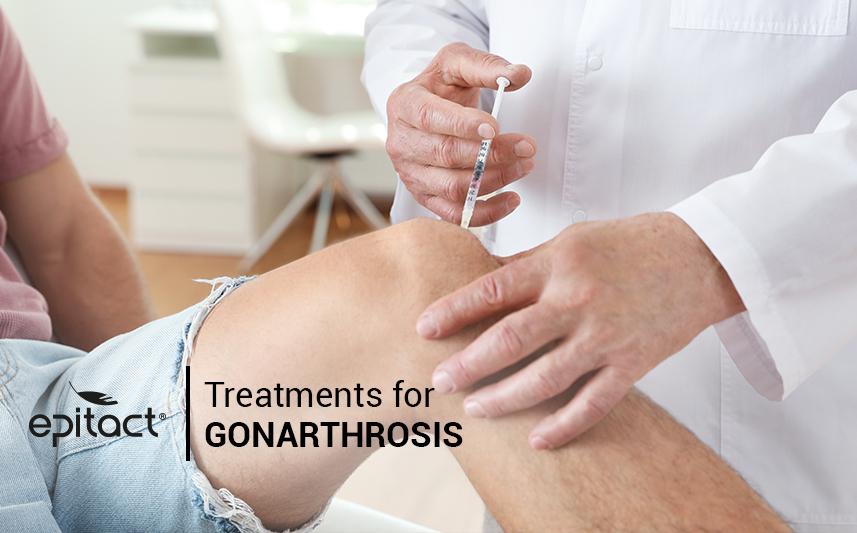
Knee pain is too many times neglected. However, it can be very disabling. There are different types of knee pain (gonalgia), but arthritis in knee is one of the most frequent. Pain, which is intermittent and localised in the beginning, can become diffuse and constant, even at rest. It leads to stiffness, swelling and discomfort during movements. To relieve arthritis in knee or knee arthritis, many treatments exist.
What is arthritis in knee or knee arthritis?
Arthritis in knee or knee arthritis is a common joint condition caused by cartilage wear. The knee is a tripartite joint that includes the femur, tibia and kneecap.
Arthritis in knee can affect the joint between the femur and knee cap: this is referring to as the patellofemoral osteoarthritis. Knee arthritis mainly affects the femur and tibia cartilage: this is called the tibiofemoral osteoarthritis.
In some rarer cases, both joints are damaged. According to the European League Against Rheumatism’s recommendations (EULAR), the diagnosis precisely determines the most affected area thanks to radiological examination. This examination can be prescribed by your sports physician, general practitioner or orthopaedic surgeon.
Treatments for arthritis in knee
The location of arthritis in knee and the stage of the condition stage determine what is the most appropriate treatment to receive. Each case is unique. In the beginning of the condition, it is always preferable to have a conservative treatment as a first-line approach. However, if the condition worsens, your practitioner can suggest you more invasive treatments.
Conservative treatments for arthritis in knee
The first objective of treatment of arthritis in knee is to reduce the symptoms, specifically the pain. To do so, taking oral or topical analgesics (e.g. paracetamol) or non-steroidal anti-inflammatory drugs (NSAIDs) can relieve you.
You can also be prescribed corticosteroids or hyaluronic acid injections to alleviate your pain. Lastly, for patellofemoral osteoarthritis, wearing a specific knee brace is specially advocated as conservative treatment. The EPITACT® PHYSIOstrap™ MEDICAL knee brace* has been created to relieve pain related to patellofemoral pain syndrome or patellofemoral osteoarthritis. A tendon made of silicone and a technical fabric surrounds the kneecap to avoid its potential misalignment during extension movements. The ultra-thin fabric doesn't apply additional pressure on the knee. This fabric is combined with two silicone strips: one around the calf, the other around the thigh. This design guarantees a good holding all day long and is also available in sport version*.
Wearing orthopaedic insoles can also reduce the symptoms by changing the body weight distribution.
In addition, your general practitioner can prescribe you some physiotherapy sessions to complete your treatment. The nature, duration and intensity of the exercises will be adapted to you to strengthen, relaxing and stretch your muscles.
If your stoutness favours the condition, you can be suggested a nutritional follow-up to improve your BMI (Body Mass Index), thereby reducing the pressure on your joints.
Surgical treatments for arthritis in knee
If the conservative treatments are insufficient to slow down the progression of arthritis in knee, surgical intervention can be considered. This intervention consists in implanting a knee prosthesis. Except for some associated conditions, there are not contraindications for this procedure. However, like any surgical intervention, there are some risks such as those related to anaesthesia.
Physiotherapy sessions may be sufficient and avoid a stay in a rehabilitation centre.
Depending on the degree of the joint deterioration, the knee prosthesis can be partial or total. Partial prosthesis consists in substituting the most damaged part of the joint. It means that the medial or lateral tibiofemoral compartment or the patellofemoral compartment can be replaced.
This surgical intervention can be performed under general, spinal or regional anaesthesia.
The incision is made on the knee, along the patellar tendon.
The prosthesis is implanted with impaction thanks to a specific cement that contains calcium and favours bone regrowth on the prosthesis for a definitive fixation.
Finally, a drain is placed to remove the existing haematoma. To limit the risk of phlebitis, compression stocking and anticoagulants can be prescribed. Rehabilitation allows more flexibility and strength in order to progressively resume normal activities and improve your life comfort.
The treatment for arthritis in knee depends on many factors such as the affected joint compartment, the pain experienced or the discomfort caused for example. Either conservative or invasive, the treatments prescribed for knee arthritis should be meticulously followed to hope for the best results possible.
Discover more details about arthritis in knee and who are the people at risk for this knee condition.
*These products are class I medical devices that bear the CE marking under this regulation. Carefully read the instructions before use. Manufacturer: Millet Innovation. 08/2021
For more details about this general and simplified approach, here are further sources:
https://www.arthrolink.com/fr/dossiers-arthrose/tous-les-dossiers/arthrose-quand-operer
https://www.eular.org/search.cfm https://public.larhumatologie.fr/grandes-maladies/arthrose/comment-se-traite-aujourdhui-larthrose