 Contact
 Pharmacie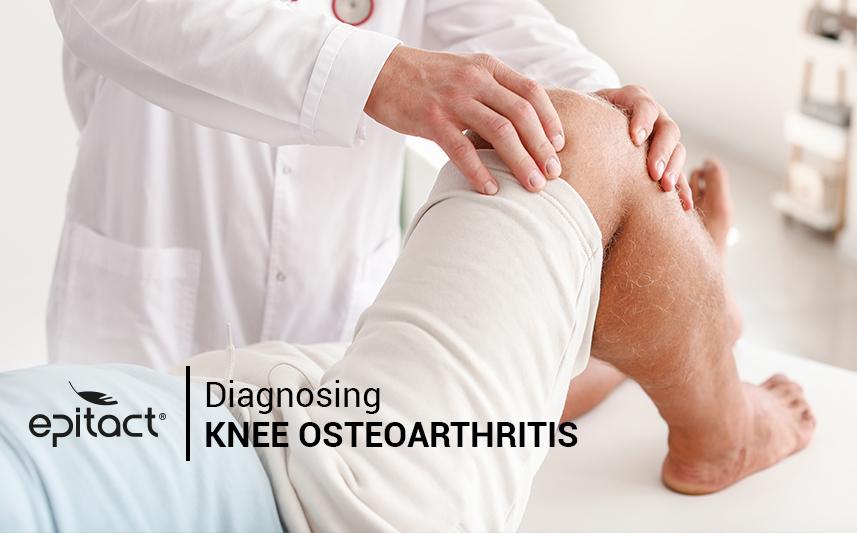
Gonalgia, or knee pain, is a symptom of many conditions. Your joint cracks, hurts and you’re suspecting knee osteoarthritis or gonarthrosis? How to diagnose gonarthrosis or knee osteoarthritis? The clinical and radiological examination remain the best way to make an accurate diagnosis of your symptoms.
Which practitioner to consult for knee pain?
Your knee pain increases and you hesitate about continuing your daily and sport activities? However, if it’s osteoarthritis, keeping on doing activities can slow the progression of the conditiony. Consultation with a specialist is essential to determine which behaviour to adopt.
If pain is punctual, your general practitioner will help you find a treatment to relieve symptoms.
If pain appears and intensifies, it is preferable to consult a specialist on your general practitioner’s recommendations. Either a rheumatologist or an orthopaedic surgeon (if the condition is advanced), will be able to confirm or not the diagnosis of gonarthrosis.

Definition of gonarthrosis
Gonarthrosis, or knee osteoarthritis, is a condition characterised by the natural wear of the knee cartilage. It may occur at a relatively early age if the knee is very used. If the cartilage is heavily damaged, the wear spreads to the bone, leading to stiffness and mobility reduction.
Clinical examination to diagnose gonarthrosis
The best way to diagnose gonarthrosis or knee osteoarthritis is the clinical examination. Firstly, the doctor will ask you about the intensity and frequency of your physical activity as well as your symptoms. These can be different according to people: redness, swelling, localised or diffuse pain, stiffness, cracking, etc. Symptoms often change depending on whether you’re in a resting or activity period.
Thanks to physical examination, your practitioner is able to determine if your pain is associated with pressure or movement.
Lastly, this clinical examination is often completed by X-ray images to assess the stage of development of knee osteoarthritis.
Radiological examination to diagnose knee osteoarthritis
The knee is a complex joint including the femur, tibia and kneecap. In this way, gonarthrosis or knee osteoarthritis can affect one part of the joint (patellofemoral or tibiofemoral osteoarthritis) or the whole joint, even if it's rarer. The radiological examination helps to determine this to diagnose gonarthrosis but especially to get the appropriate medical treatment according to the European League Against Rheumatism (EULAR).
Radiographs also reveal:
• A potential joint space narrowing associated with the thinning of the cartilage and to its possible fissures;
• The presence of osteophytes, also named ‘bone spurs’. Osteophytosis is characterised by bony outgrowths forming on the end of the bone in reaction to cartilage wear;
• A possible condensation of the subchondral bone that supports the joint in the absence of cartilage to protect it;
• Cavities in the bone called subchondral cysts or geodes are symptomatic of osteoarthritis;
• The degree of wear of the subchondral bone in case of advanced osteoarthritis.
Once the diagnosis is established with certainty, you will be prescribed a specific protocol to stop the process and relieve the joint.
If you’re dealing with patellofemoral gonarthrosis, you could wear a knee brace like the PHYSIOstrap™ MEDICAL* to support your joint and relieve your pain. This light and thin medical device stabilises the kneecap and surrounds it with a silicone tendon and a technical fabric without impeding mobility. During flexions at the joint, the tendon stretches and comes into tension to counter the potential misalignment of the kneecap from its natural track. Two silicone holding strips (around the thigh and the calf) guarantee a good holding of the knee brace and avoid it to slip during the day. This brace is then adapted to people who want to relieve knee pain during daily activities.
*PHYSIOstrap™ is a class I medical device that bears the CE marking under this regulation. Carefully read the instructions before use. Manufacturer: Millet Innovation. 09/2021
For more details about this general and simplified approach, here are further sources:
https://www.eular.org/myUploadData/files/chapter%2030%20-%20module%2030.pdf