Absorb shocks and relieve pain when walking.
Choose your size


Free shipping
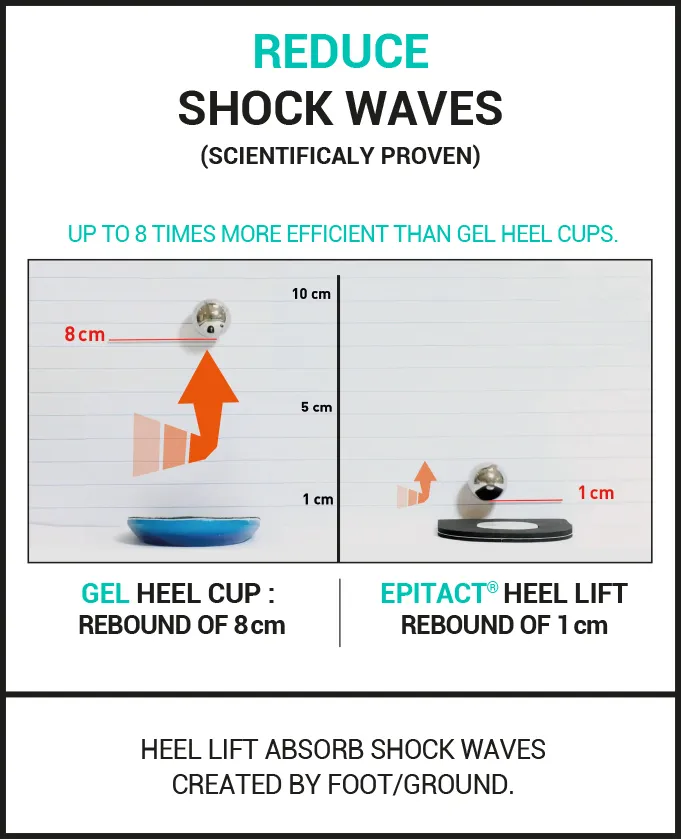
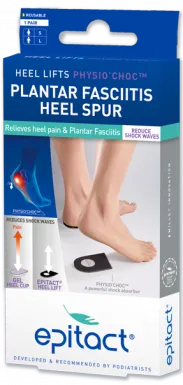
EPITACT® Heel Lifts ease pain by reducing shock waves and alleviating the strain on the plantar fascia.
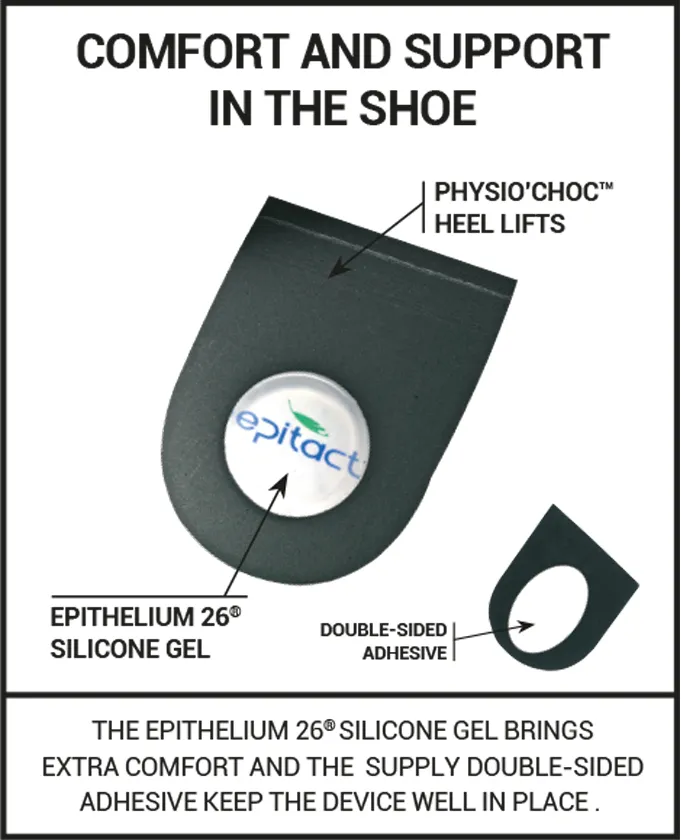
The EPITHELIUM 26® silicone gel brings extra-comfort and the double-sided adhesive enables the heel lifts to stay in place in the shoes.
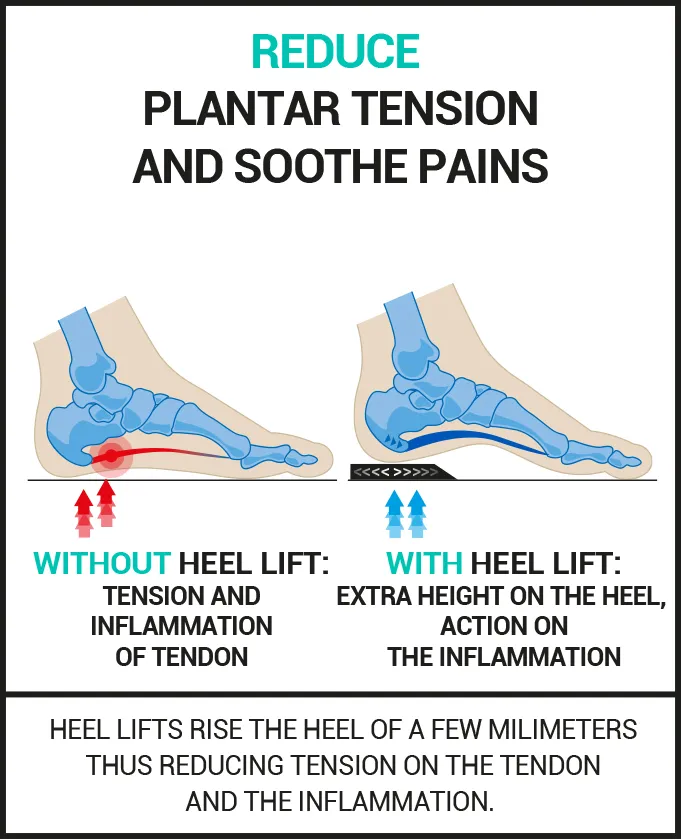
PHYSIO'CHOC™ is a podiatrist-approved powerful shock absorbing material. Heel lift made of PHYSIO'CHOC™ dissipates the energy generated as the foot makes contact with the ground: as a result, join and back pain are reduced. Moreover, lifting heels up by 5 mm alleviate strain on the plantar fascia and brings comfort.
Ultra-thin
Ultra-light
Sold by pair (Woman-S / Man-L)
This product is a class I medical device that bears the CE marking under this regulation. Carefully read the instructions before use. Manufacturer: Millet Innovation. 09/2019.
EAN Size S 3660396010846 - Size L 3660396010853
Heel lifts must be made of gel to be efficient on pain.
FALSE! To relieve pain caused by plantar fasciitis, heel must be lifted to reduce the stress on the plantar fascia. Besides, heel lifts must be made of a material which shows shock absorbing properties to limit traumas generated as the foot makes contact with the ground: some gels show this property (not all of them!) but some other materials like PHYSIO'CHOC™ are powerful shock absorber.
The more comfortable heel lifts are only made of gel.
FALSE! At first, gel heel cup seems more comfortable but when you wear them all day long, they may lead to heel pain. Moreover, as they are very flexible, they induce foot collapse inward called overpronation. Wearing this kind of device for a long time can enhance pain elsewhere in your body, for example in the knees.
Wearing high heels is not recommended in case of plantar fasciitis.
FALSE! Wearing high heels doesn’t necessarily cause pain related to plantar fasciitis. Indeed, this pain often occurs when footwear habits are changed. For example, walking barefoot or with flat shoes after wearing high heels may cause this pain. Since the foot biomechanics is modified, the aponeurosis is under strain, triggering pain. It is therefore recommended to change the type of shoes regularly to avoid the foot to be used all the time and in the same way.
Pharmacie