 Contact
 Pharmacie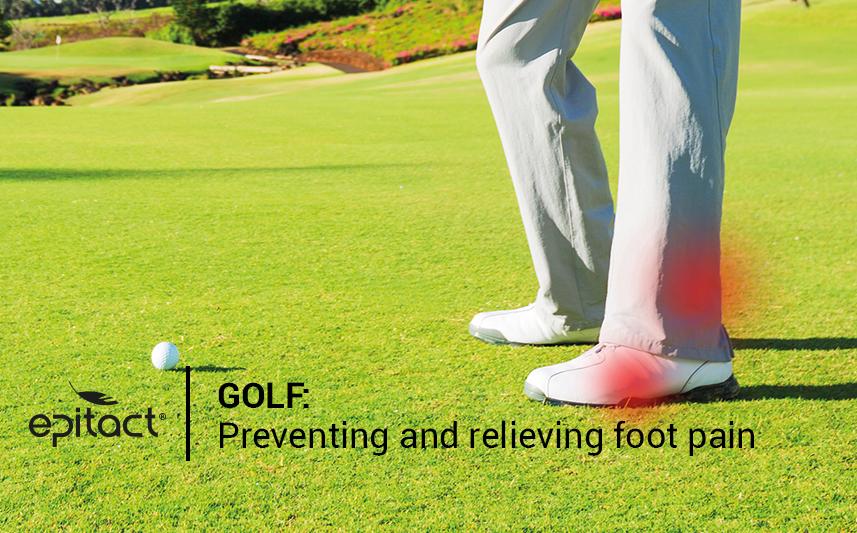
Among the most complete sports involving several joints, let’s cite golf. Indeed, this sport require the use of the back, hips, wrists, knees and feet. Between repetition of movements during practice, swings and steps on the green, the body moves continuously. However, the frequency of injuries is higher in some parts of the body. Focus on these joint conditions, pain and musculoskeletal disorders with EPITACT®.
Parts of the body the most exposed to injuries in golfers
Injuries in golf
An international consensus statement showed that amateur golfers suffer from 1 injury per 1000 hours(1)!
The cause of injuries in golfer is different depending on if it’s a professional or amateur player. For professional golfers, injuries are much more caused by overuse of joints whereas in amateurs, they are rather linked with a swing that would deserve improvement(2).
Musculoskeletal disorders in golf
There are different risk factors of musculoskeletal disorders (MSD) in golf. Regular practice of physical activities such as golf is one of them. The impact of stresses imposed to the body that result from repeated movements is far from being benign. Arthritis, carpal tunnel syndrome or low back pain are some examples of the frequent consequences on the course.
Joint conditions in golf
The common causes of pain in golf include pressures, poor positions and postures as well as biomechanical problems. By the way, the foot is especially vulnerable: ball of the foot and heel pain, corns, calluses…
In addition to bad postures and supports, the type of shoes also plays a role in the onset of foot pain. Indeed, inappropriate shoes favour the formation of a bunion (hallux valgus). This deformity, caused by excessive pressure on the toes, is mainly due to some kind of shoes.
Even more common, heel spur is another foot involvement. Very frequent in golfers, this intense pain in the heel and under the fascia is caused by plantar fasciitis.
Don’t be worry, solutions exist to protect all these painful areas and to improve comfort during the practice or competitions!
Preventive solutions for foot pain in golf
Warm-up, stretching and muscle strengthening exercises
Before sessions, any self-respecting golfer will begin with warm-up exercises to avoid pain once on the green. By doing these short exercises, the whole body and especially muscles and ligaments get prepared for efforts. Then, you limit the risks of being injured.
As a complement, stretching exercises to do regularly and especially after your session will help you keep a certain mobility. Finally, muscle strengthening exercises will support your joints for more comfort and reduction of risks of injuries.
The solutions to prevent and treat foot pain
Firstly, choose shoes adapted to your foot shape to avoid excessive pressures: not too narrow, not too wide. Pay attention to the seams that could create additional and painful pressure on the foot. Finally, opt for shoes with a qualitative sole that absorbs and distributes pressure properly when the heel hits the ground.
Solutions to protect your toes from corns causes by pressure and friction in the shoe are also available. The DIGITUBES®* or Digitops* are washable and reusable protections that comfortably separate the affected toes.
Lastly, in the case of a bunion or hallux valgus, the range of products by EPITACT® includes several versions of braces that realign the big toe. The flexible brace* for activities, the rigid brace* for resting periods and the sport brace* for sport sessions!
The preventive solutions for ankles
Performing a swing require some torsions and rotations for the body that may cause physiological disorders. If it is controlled, this movement has no reason for leading to such consequences.
However, inappropriate weight transfer resulting from imprecise movements can cause twisting of the ankle outwards (varus deviation). Moreover, risks of fatigue-related injuries responsible for osteoarticular problems and ankle sprains are frequent in golfers. For these players, golf could be progressively resumed only after immobilisation and serious rehabilitation.
By associating adapted shoes, correct movements and warm-up exercises, golf does not represent more risks than another sport. However, as any sport or physical activity, golf can present some risks of traumas or conditions. To face strong joint overuse, some medical devices exist. Each of them is dedicated to your daily comfort and accompanies you on the course so that you enjoy the pleasure of playing golf!
*These products are class I medical devices that bear the CE marking under this regulation. Carefully read the instructions before use. Manufacturer: Millet Innovation. 03/2022
For more details about this general and simplified approach, here are further sources:
(1)Murray, Andrew, Astrid Junge, Patrick Gordon Robinson, Mario Bizzini, Andre Bossert, Benjamin Clarsen, Daniel Coughlan, et al. « International Consensus Statement: Methods for Recording and Reporting of Epidemiological Data on Injuries and Illnesses in Golf ». British Journal of Sports Medicine 54, no 19 (October 2020): 1136‑41. https://doi.org/10.1136/bjsports-2020-102380.
(2)Quand le golf fait mal : problèmes musculo-squelettiques communs aux golfeurs. Wadsworth LT.Curr Sports Med Rep. 2007 décembre ; 6 (6) : 362-5. doi: 10.1007/s11932-007-0052-5