 Contact
 Pharmacie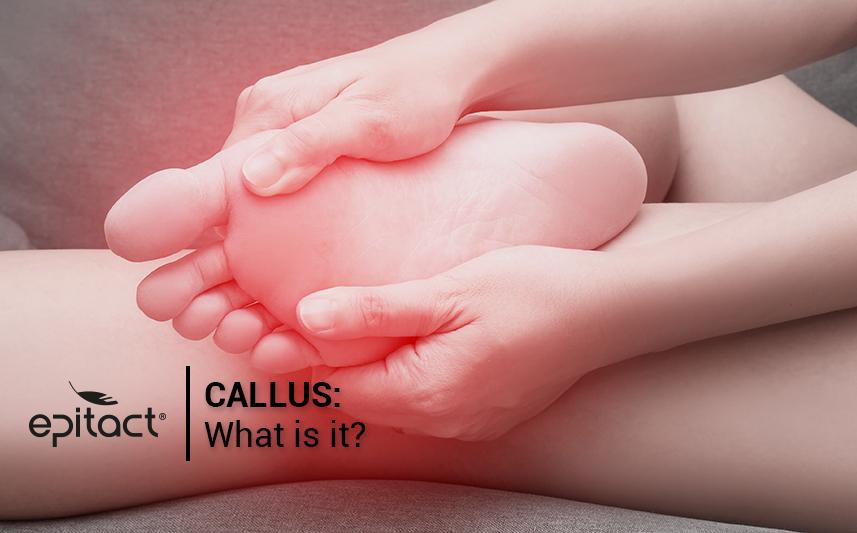
Our body is extraordinary and gives us a freedom we’re not aware of until it stops functioning normally. Our feet support our whole body and contribute to our balance but however, we don’t take care of them enough. Even worse, we mistreat them. Their only way to defend themselves is to develop callosities on the areas of pressure. To make good resolutions and take care of your feet, let’s find out what are the differences between a callus, a corn and a callosity.
Definition
You dare not wear open shoes anymore because dry skin covers your heels and toes? Don’t worry, this is not irreversible. To fight against these unsightly excrescences, let’s try to identify them better.
Corns, such as calluses, are callosities forming on areas of excessive pressure and/or rubbing. The hands and especially the feet are the main victims. Progressively, the process of hyperkeratosis takes place: the skin thickens on the pressure areas until it becomes hard in order to protect the body from these repeated supports.
What’s a corn?
A corn is an excessive thickness of skin (keratin) on a small area affected by high pressures. It appears as a hard and inverted cone that reaches the deep layers of the skin. Most of the time forming on the toes, the foot corn is very uncomfortable and painful.
Find out more information about the different types of foot corns.
What’s a callus?
A callus is an epidermal injury over a large area. Subject to high and frequent frictions and pressures, the skin thickens to protect itself. It becomes hard, leading to the formation of a kind of rough hemispheric excrescence relatively friable that can progressively turn yellow. In some people, this area becomes more sensitive, even painful. The feet are particularly affected because of the wearing of shoes that are inappropriate to the morphology or due to poor supports on the ground.
The callus often forms on heels, under the forefoot or even under or on the top of the toes, causing acute plantar pain.
What’s a soft corn?
Other terms may be employed to refer to these skin excrescences associated with pressure: corn, callus, callosity, hyperkeratosis or soft corn.
A soft corn is an interdigital corn with a black point in its centre. This point is often due to a bleeding dermal papilla.
No matter if it’s a corn, a callus or a soft corn, each condition has a solution developed by EPITACT®!
Corn, what to do? What treatment for a callus? Help! I have a soft corn!
Consulting a podiatrist is the first step to treat a corn or a callus. He will remove the callus or the corn stone. In other words, it’s about removing dead skin or horn that form the callosity. Once healed, the area should be protected to avoid recurrence. To do so, a silicone gel protection will distribute pressures and limit rubbing to stop the process of hyperkeratosis.
If the area to protect is a toe and in case of corn or soft corn, opt for the DIGITUBES®*. If the corn is located on the tip of the toe, favour the Digitops*.
Lastly, if you’re suffering from plantar pain associated with calluses, the plantar cushions* are particularly recommended.
*These products are class I medical devices that bear the CE marking under this regulation. Carefully read the instructions before use. Manufacturer: Millet Innovation. 09/2021