 Contact
 Pharmacie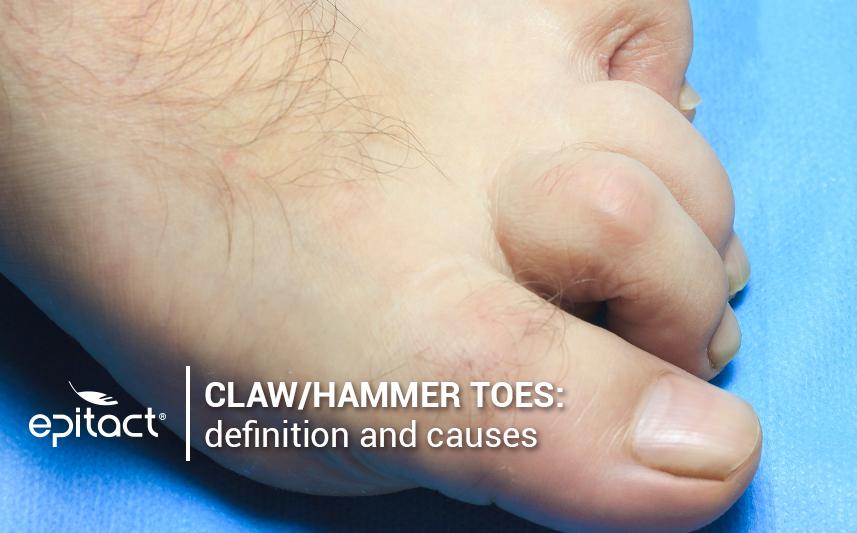
Claw toes, mallet toes or hammer toes are three different deformities that affect the toes. They are frequently associated with a bunion (hallux valgus) and reduce comfort, especially in the shoes. To relieve pain and re-establish stability, a conservative treatment is generally sufficient. But, in some cases, surgery is the only option. Let’s discover the differences between these toe deformities and their appropriate treatments.
Hammer toe
Hammer toe is a flexion of the first phalanx (proximal phalanx) of the toe. As a result, the toe is bent downwards.
Mallet toe
Mallet toe is a deformity of the last phalanx of a toe (distal phalanx). This third phalanx is in a flexed position compared with the second phalanx.
Claw toe
Claw toe associates hammer toe and mallet toe deformities: the first phalanx is extended while the second and third phalanges are flexed downwards.
Swan neck deformity
This is a rare deformity that mainly affects the fingers but can also concern the toes. The joint at the base of the toe is flexed, the first joint (first interphalangeal joint) is extended and the second joint (second interphalangeal joint) is also flexed downwards.
Symptoms & diagnosis of claw and hammer toes
Symptoms of these toe deformities are easy to identify. If the toes are deformed, a simple visual examination can confirm the diagnosis. This clinical examination is part of a complete medical procedure.
For more details about the degree of the bone deformity, a radiological assessment can be prescribed. It gives more information about the potential damages of the phalangeal joints and their positions in relation to each other. After that, your doctor will refer you to a specialist: podiatrist, rheumatologist, orthopaedist...
The affected joint may become inflamed. The pain, combined with redness, is a typical symptom of inflammation.
A toe deformity, no matter which one it is, will make wearing of shoes difficult. The deformed toes rub against the shoe, leading to the formation of corns. Indeed, the skin thickens to protect these areas from rubbing.
If the condition is at an early stage, the toes can still be realigned, that is to say the deformity can be treated. Unfortunately, the more the time passes, the less the deformity can be reduced. If the condition is at an advanced stage, the deformity can cause luxation of the toe: it won’t be able to play its support function anymore.
Causes of hammer/claw/mallet toes
There are different causes of these toe deformities. However, they mainly result from muscle imbalance between the extensor and flexor muscles in the foot.
It is possible to classify causes in two main categories. The first category corresponds to intrinsic factors including structure or posture deformity of the foot (flat foot, bunion...) and extrinsic factors like poor fitting shoes for example.
It is also necessary to look for more general factors like rheumatic or neurologic diseases for example. These factors play a role in the deformity and, if not eradicated, the condition worsening will continue.
Consequences of claw and hammer toes
Toe deformity leads to poor position of the toes. It causes painful pressure areas and then the formation of corns and calluses. Since the toes contribute to the body stability, toe deformities can push the muscle to compensate or can aid the development of other musculoskeletal disorders.
Realigning the deformed toes
To relieve pain, realigning the toes that are still moving seems to be the best solution. If these deformities can be corrected, the objective is to give the toes the proper position. To reach this goal, the hammer toe cushion* by EPITACT® is intended to comfortably lie toes down. Its ultra-smooth fabric makes contact pleasant and provides immediate relief. Held by an elastic band, these cushions can be worn in shoes to reduce frictions.
If deformities can’t be corrected, wearing protections on the painful areas will be useful. The DIGITUBES®* are made up of a thin layer of silicone that protects the toe.
These medical protective or corrective devices are conservative treatments meant to improve your comfort.
Laslty, your podiatrist could suggest you a toe orthosis to protect or correct it.
In conclusion, symptoms allow to confirm the diagnosis. If there are multiple causes, curative solutions are more so numerous to fight against these toe deformities. If the toes are still moving, it is preferable to choose a brace that realign the affected toes. On the contrary, if the joint is ankylosed, a protection will be more appropriate.
*These products are class I medical devices that bear the CE marking under this regulation. Carefully read the instructions before use. Manufacturer: Millet Innovation. 01/2022